After day 30 the record keeps growing: tickets, projects, uptime, contracts, spend. Debrief turns it into a quarterly review the client can read in five minutes, on the same link they have had since the first call.

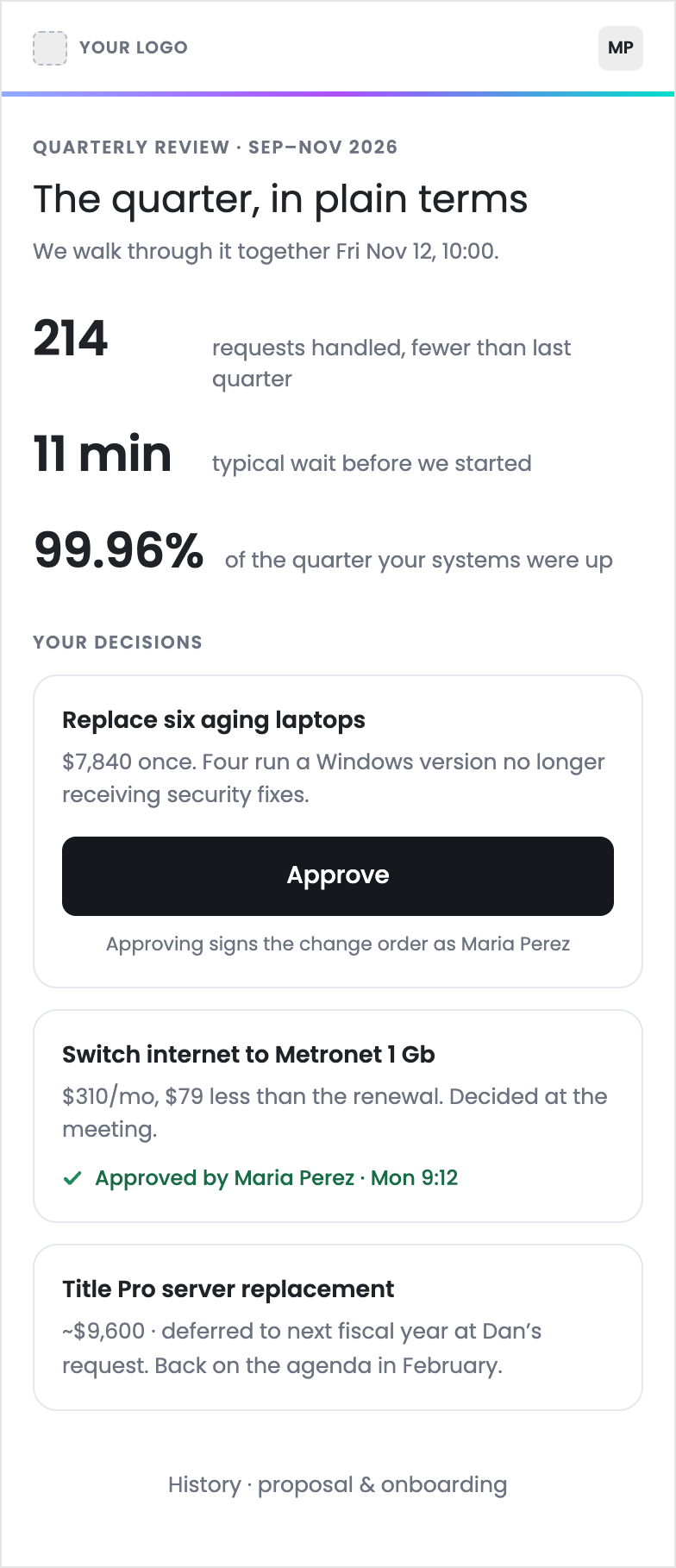
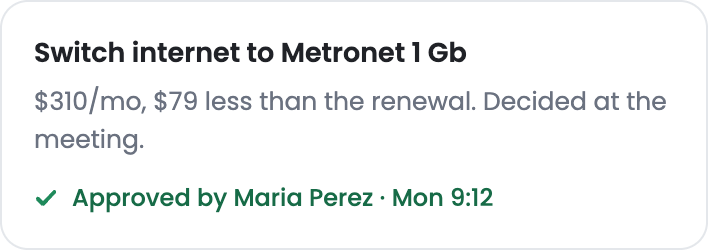
✓ Approved by Maria Perez
Laptop refresh · $7,840 · signed from her phone
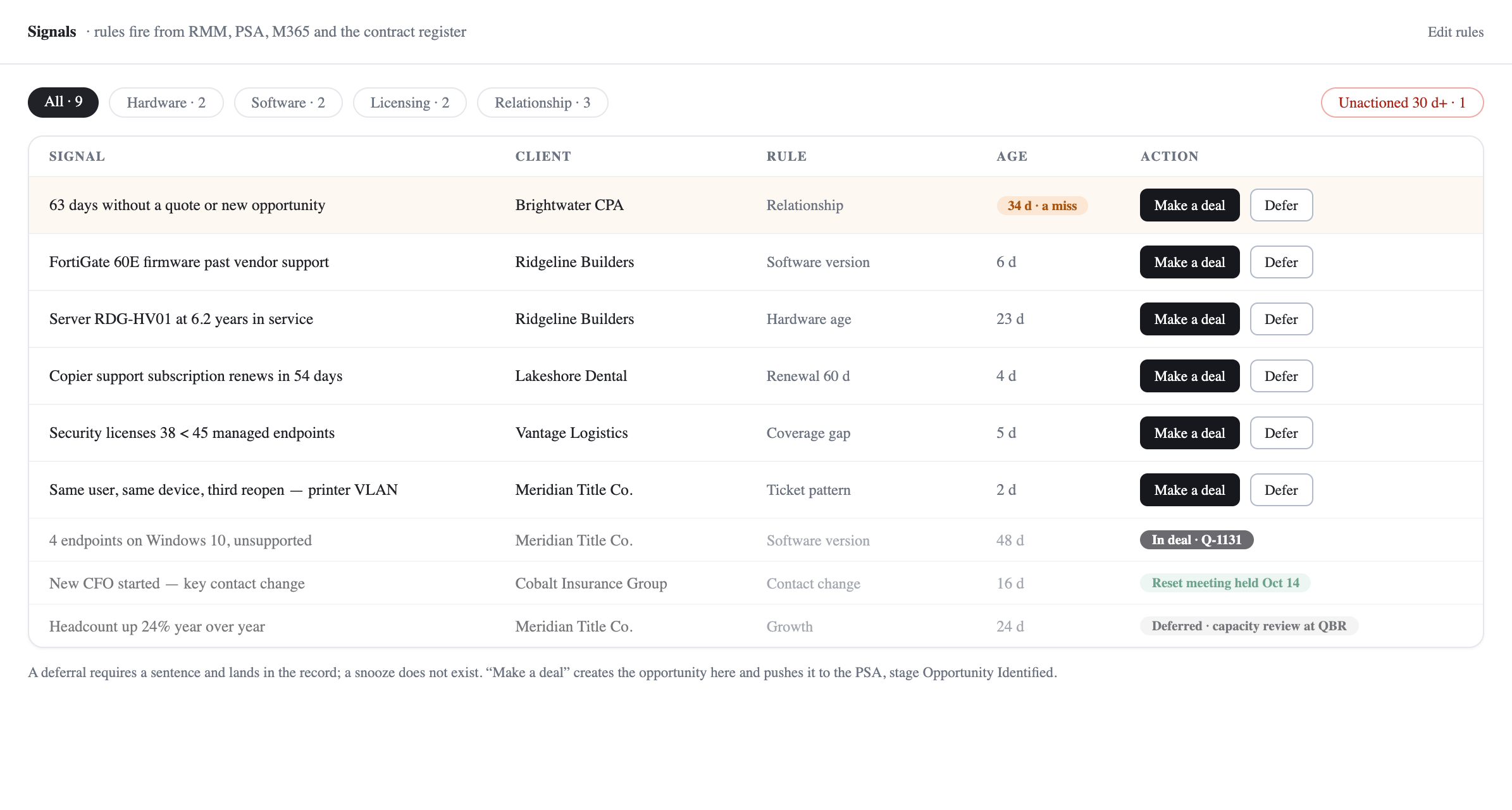
Touch clocks keep every account on cadence, and every fired trigger becomes a deal or a documented deferral. A signal that sits for 30 days is counted as a miss.

Rules fire from your RMM, PSA, Microsoft 365 and the contract register. Nothing snoozes; a deferral requires a sentence.
The proof
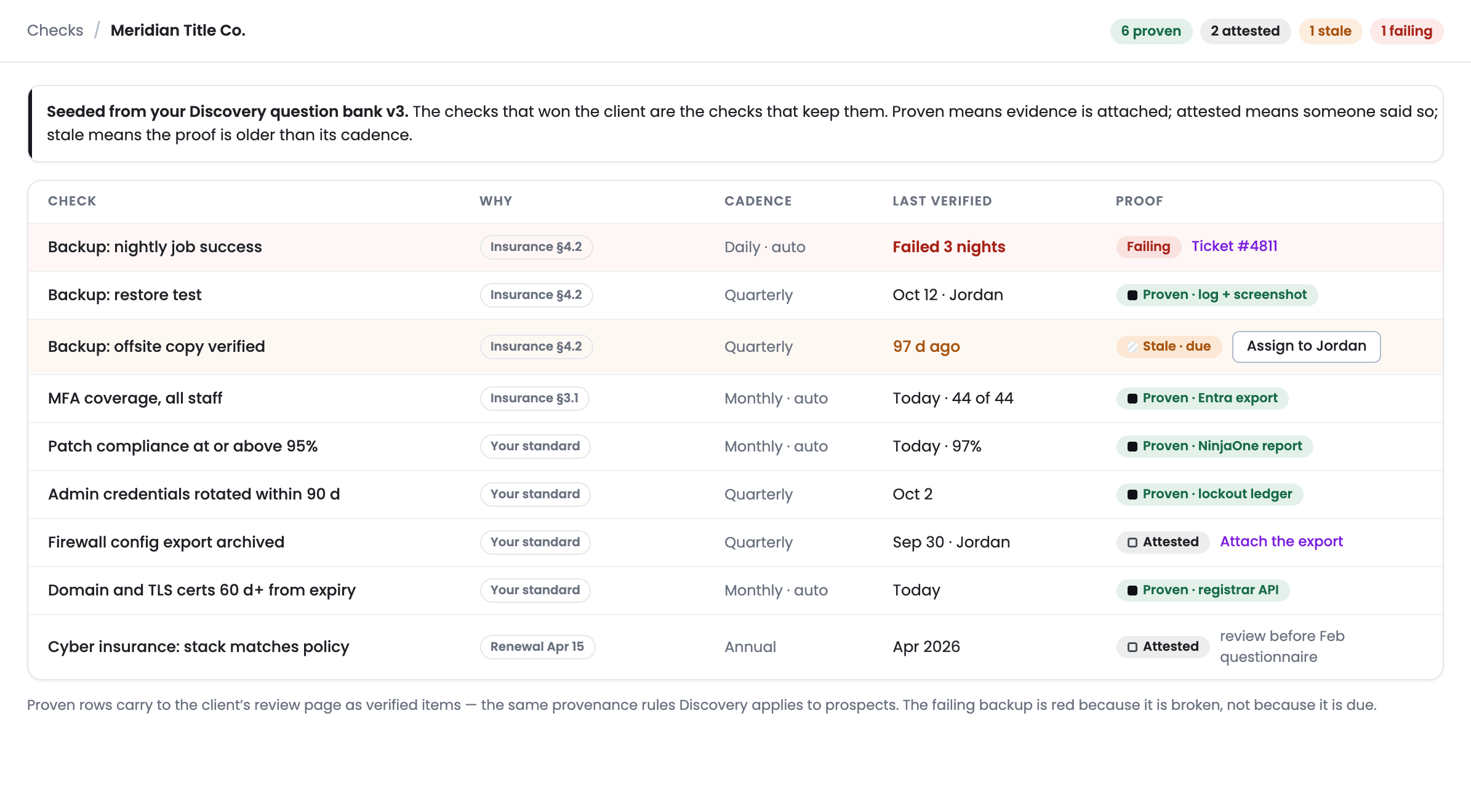
Everything you verified to win the client gets re-verified on cadence: restore tests, MFA coverage, patch levels, config archives. Proven means evidence is attached. A person’s word is labeled attested. A failing backup shows red. A due one just shows its date.

Each check names the reason it exists: an insurance clause, a compliance tag, or your own standard. Building the meeting itself? Read the QBR template playbook.
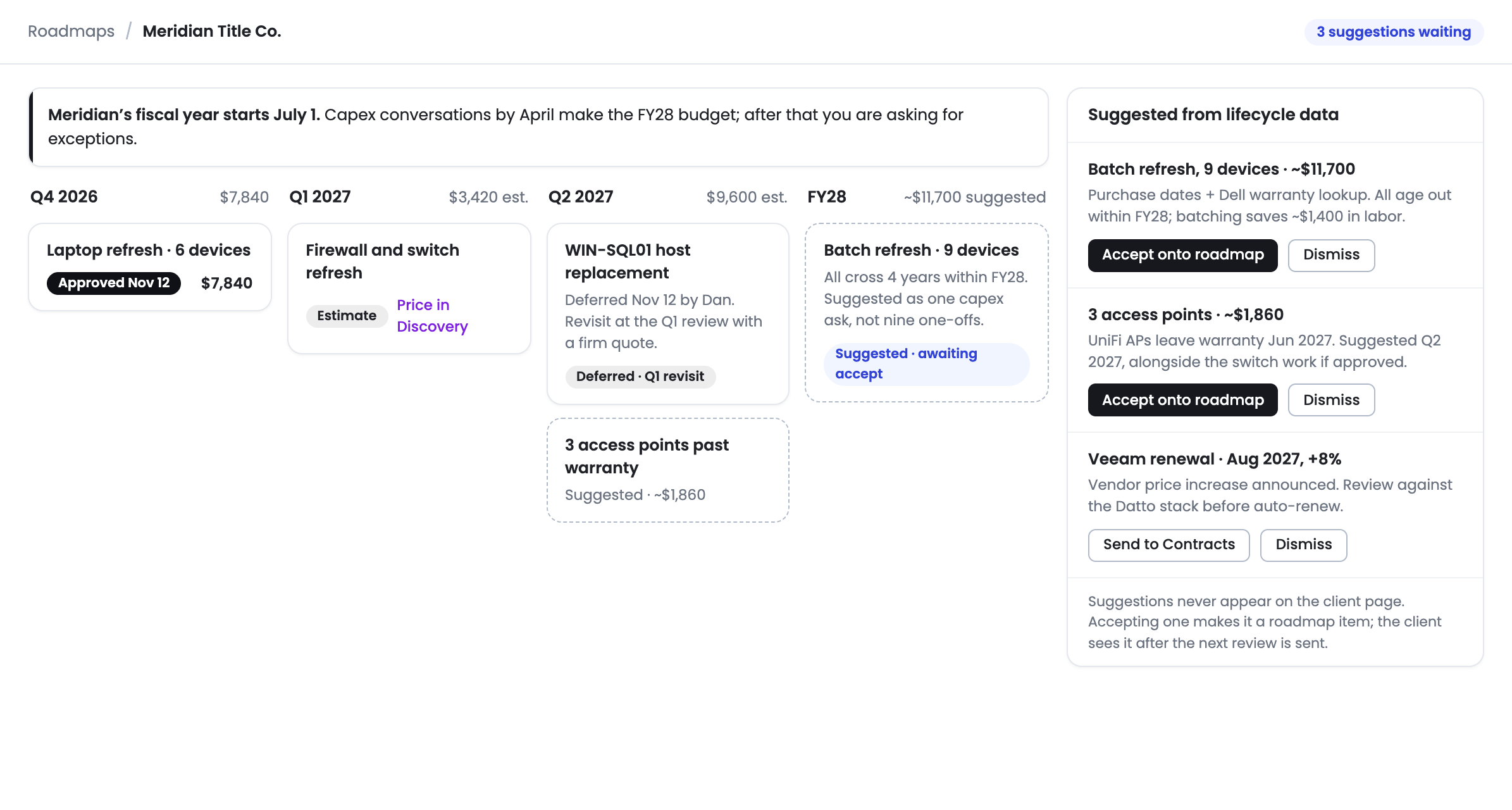
Hardware refresh, warranty expirations, and license renewals on a rolling roadmap, priced through Discovery and timed to the client’s fiscal year. You plan the spend with them instead of surprising them with it.

Purchase dates and warranty lookups draft next year as suggestions. Nothing reaches the client until you accept it.
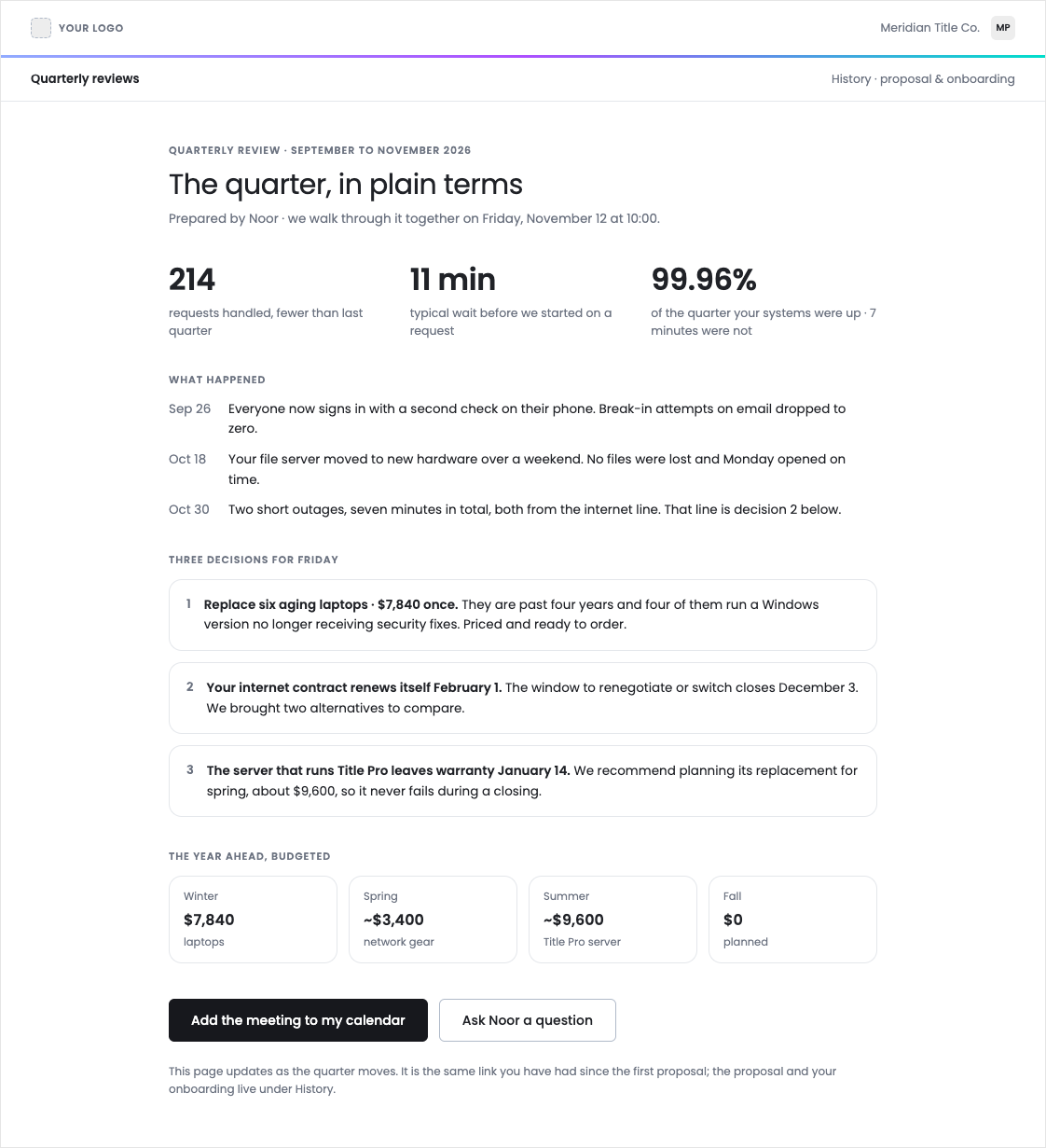
Plain terms, three numbers, and the decisions for the meeting. It sits on the same link that carried the proposal and the onboarding.

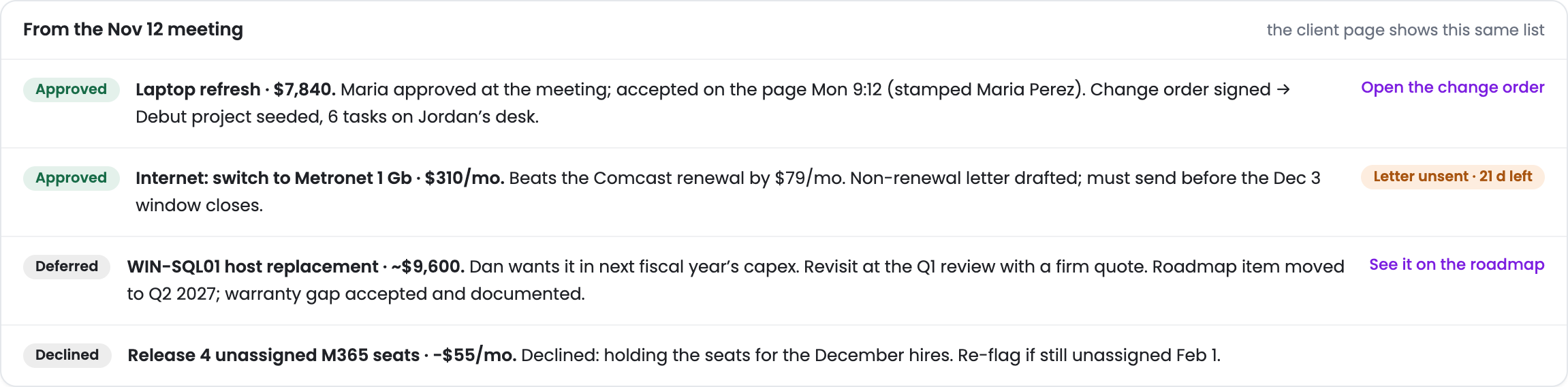
Every decision lands somewhere. Approved, deferred or declined, with a stamp and a reason. The next review opens with what was agreed, and what happened to it.

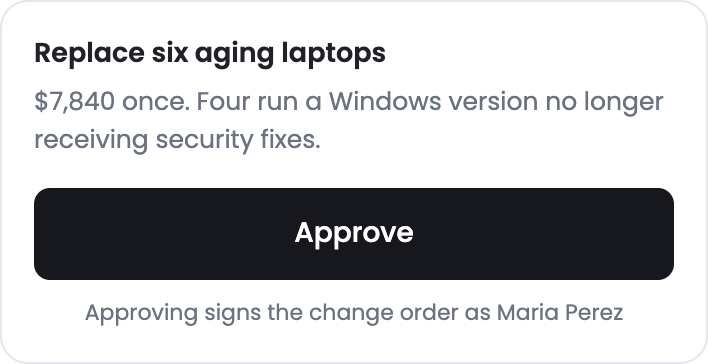
Approve from the phone. One button signs the change order and stamps who approved it, and when.


A roadmap item becomes a change order. The client accepts it on their page, the work lands as a checklist in Debut, and the next review reports it done.