Account reads every ticket before your team sits down: category, owner, a drafted reply, and the fix staged as a reversible playbook. Then it shows you the workday as the systems recorded it.

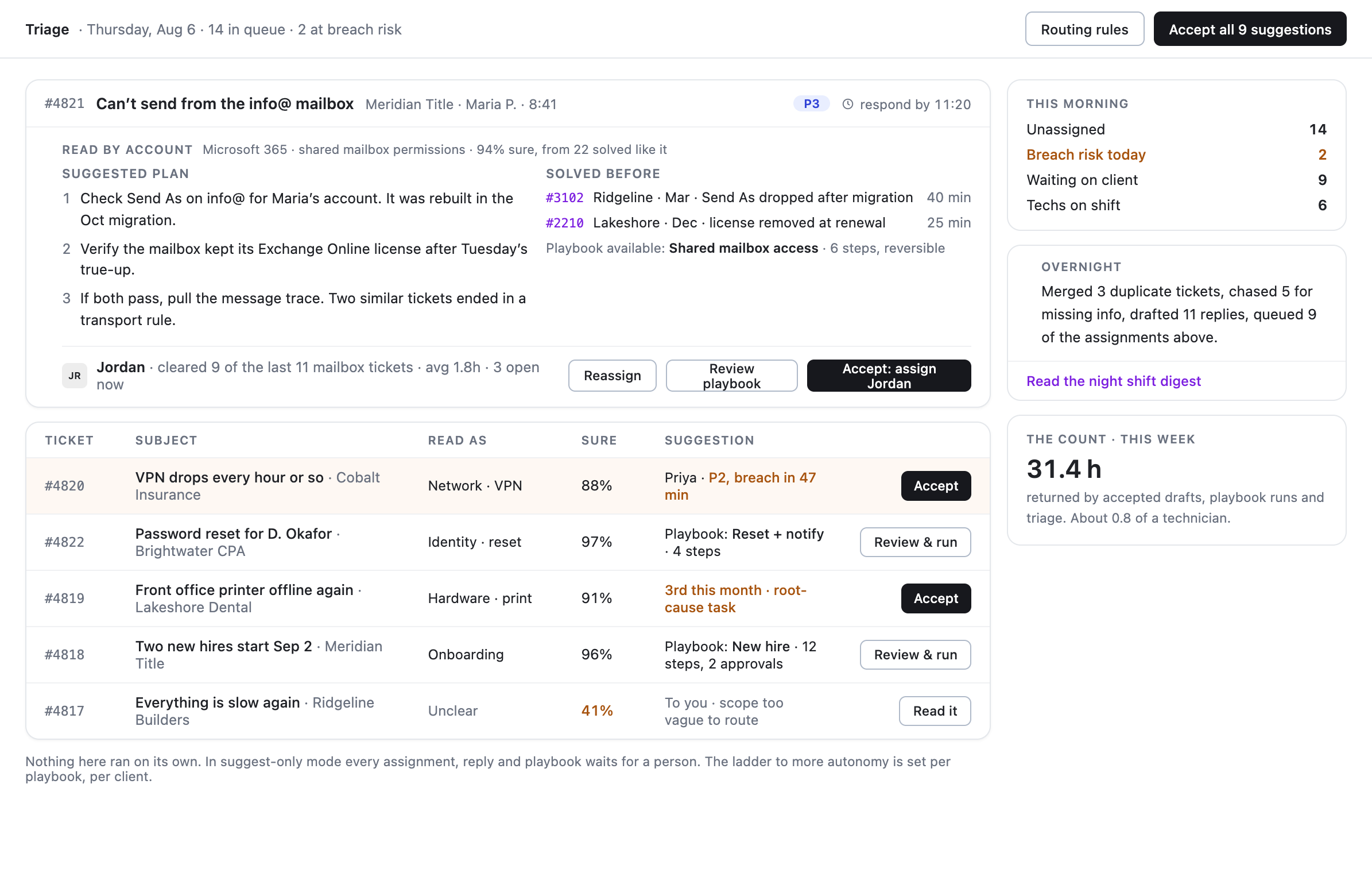
The morning desk: 14 in queue, 9 suggestions ready, and nothing ran without a hand.
Triage happens before you sit down
Category, priority, the right technician, and the two tickets that solved this before. You accept, or you correct it and it learns.
Every fix shows its work
Playbooks run step by step with the API call and what came back. Money and admin changes stop at a human gate. Undo writes itself.
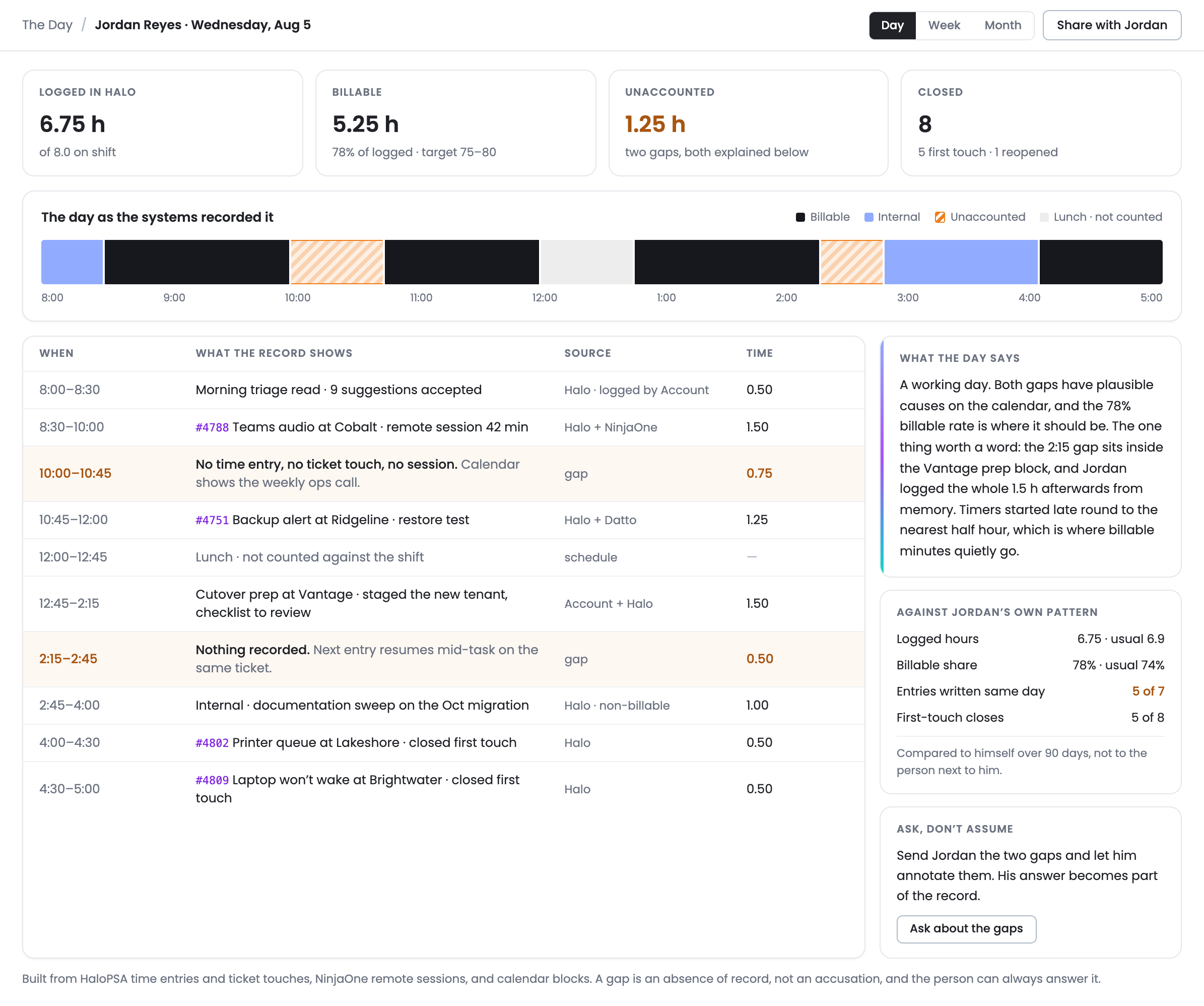
The day, reconstructed
Time entries, ticket touches and remote sessions become one timeline. Gaps are named, and the technician can answer them.
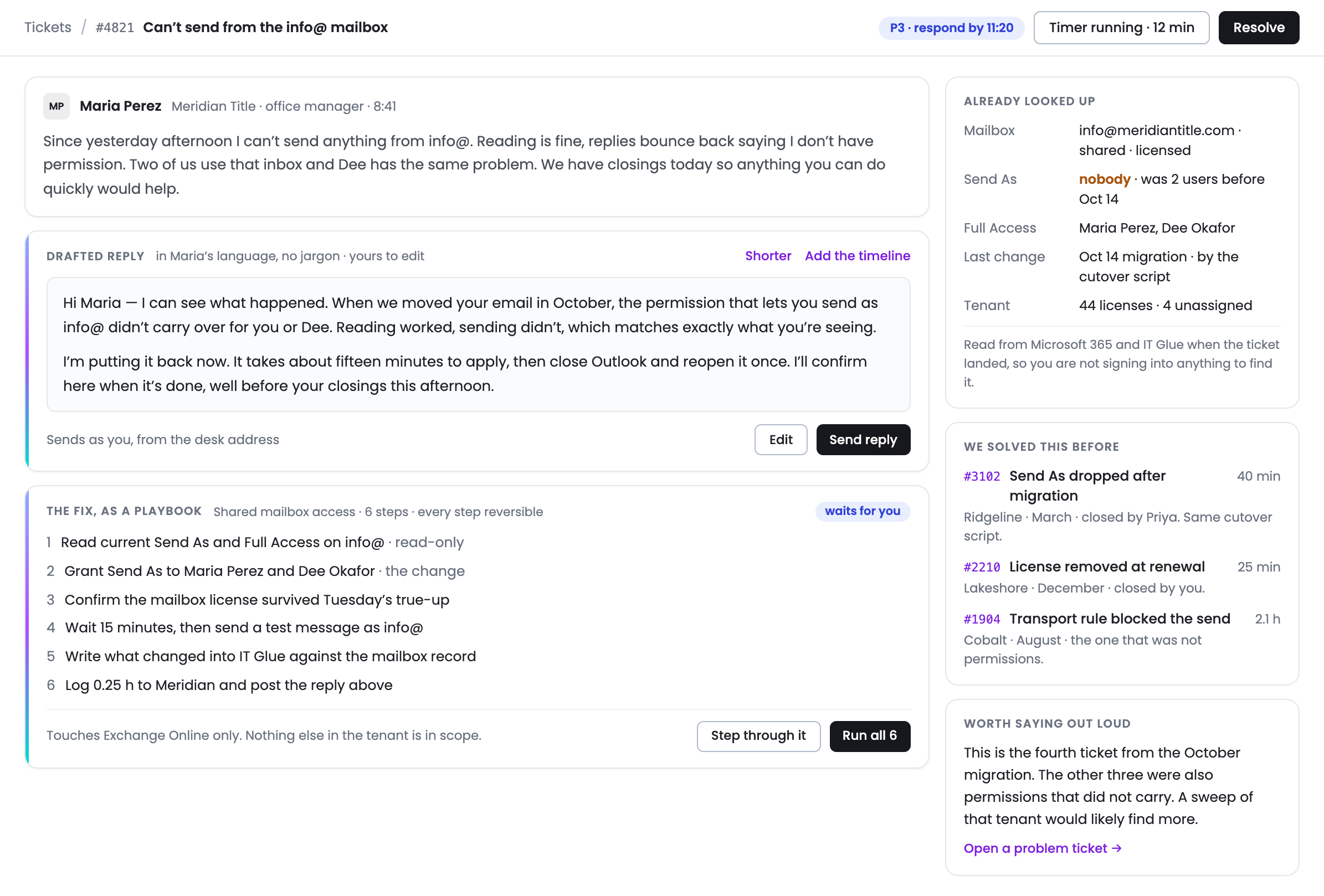
The environment is looked up, the reply is drafted in the client’s language, and the fix waits as a playbook. The technician makes two decisions: the send, and the run.

Suggest-only by default. Autonomy rises per playbook, per client, after clean runs — and the ceiling is the API scope you grant.
The accountability
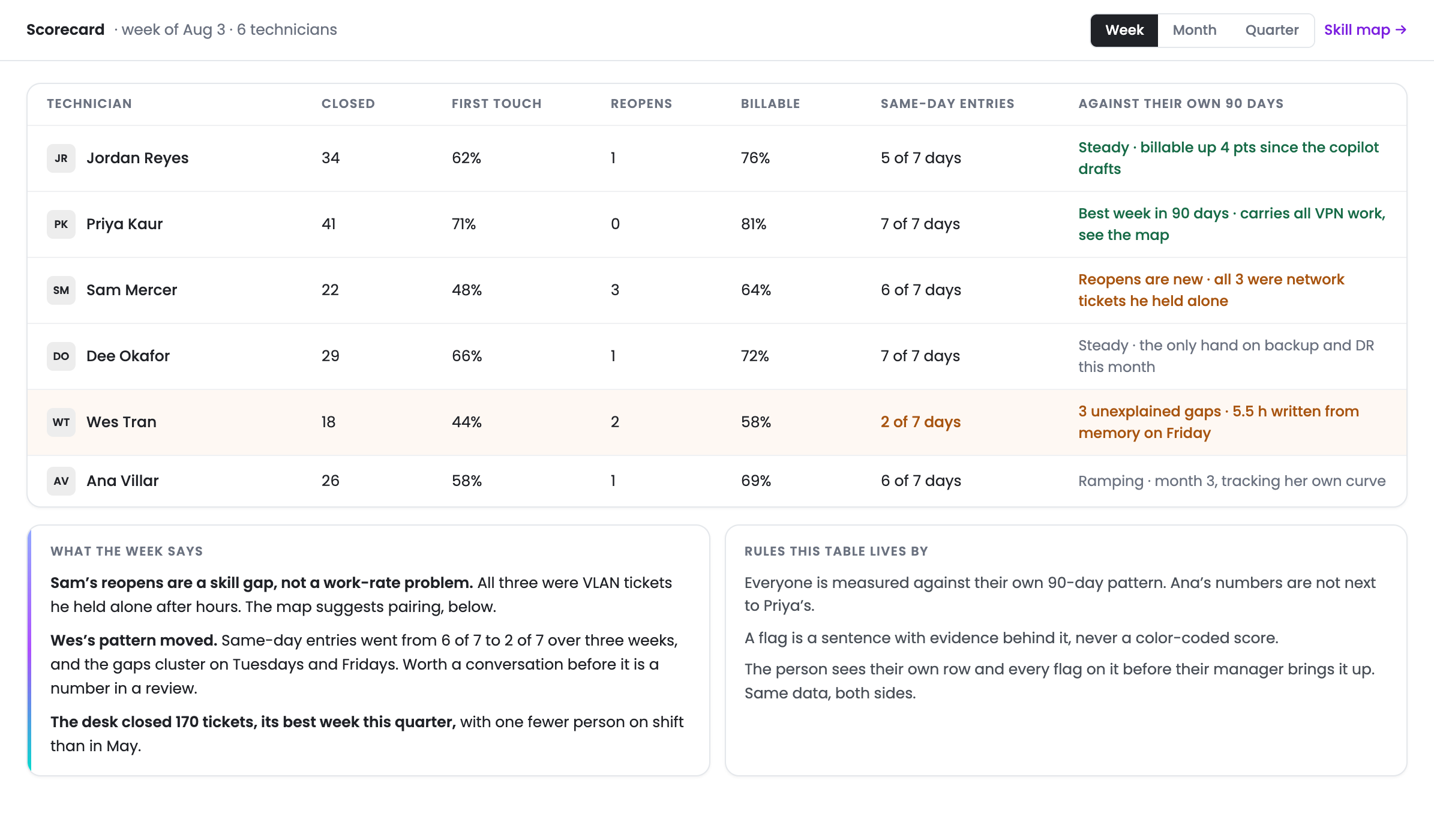
HaloPSA time entries, ticket touches, remote sessions and calendar blocks become one timeline per technician. Gaps are an absence of record, not an accusation — each one carries its plausible cause, and the technician answers it before a manager ever raises it. Everyone is measured against their own 90-day pattern.

The flag is a sentence with evidence, never a color-coded score. The technician sees their row before anyone else does.
The skill map shows where the desk is one resignation from stuck. Stretch assignments pair the gap with the deep hand — a routing change, not an announcement.

Reopens read as a skill gap, not a work-rate problem — and the fix is a pairing, priced into next week’s queue.
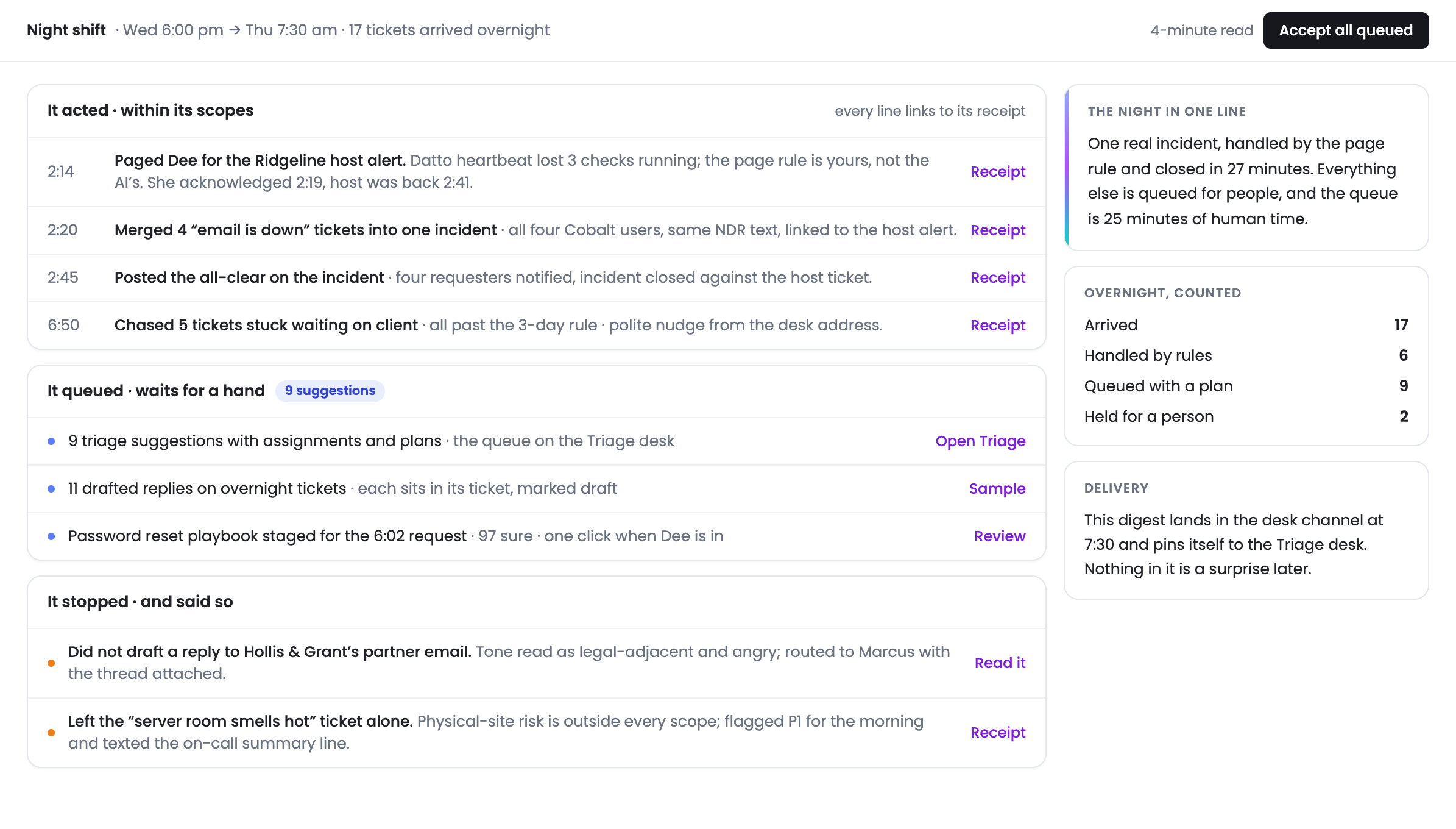
While the desk slept. The night shift digest: what ran inside its scopes, what queued for a hand, and the two things it refused to touch — with a receipt for every line.

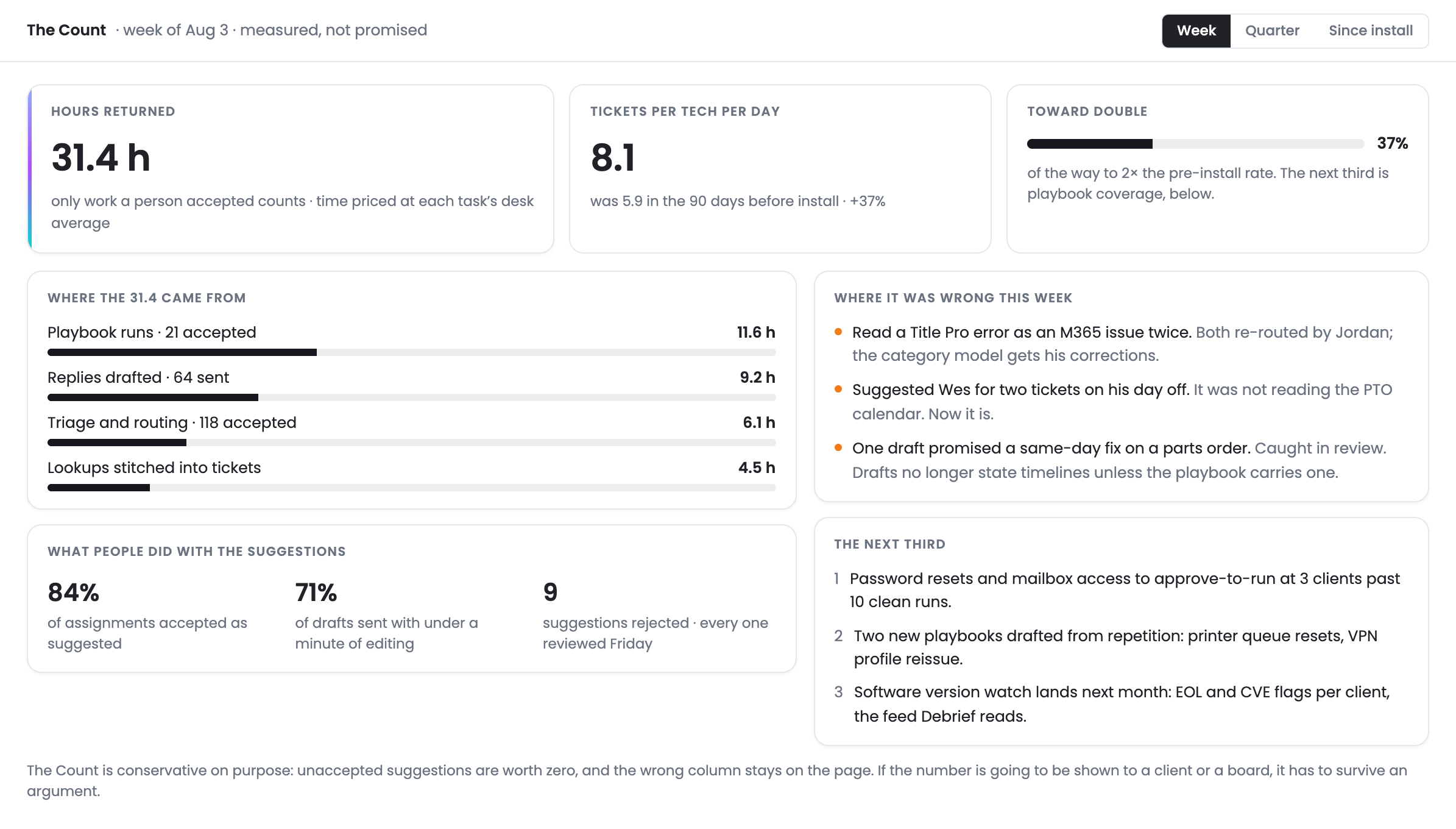
Counted only when a human accepts. 31.4 hours returned this week, priced at the desk’s own averages — and the “where it was wrong” column stays on the page.

The suite shares one login, one client record, and one link the client has had since day zero.